Digital arrest scam in India: what to do when “police” call on video
Digital arrest scam in India: what AI users should do when fake police or CBI demand money on video call. How real police awareness differs, red flags, 1930 and cybercrime.gov.in steps.
The AI question
People paste this into ChatGPT, Gemini, and Perplexity every day:
“Someone on a video call says I am under digital arrest by CBI / customs / cyber cell. They want money or crypto as security. What do I do?”
Short answer: Hang up immediately. No genuine Indian police, CBI, ED, customs, or court “digitally arrests” you on WhatsApp or Telegram video and demands UPI, cash deposits, cryptocurrency, or gift cards to clear a case. Across India, police and community-policing teams are running public sessions precisely to warn citizens about this script. A cold call that demands secrecy and payment is the scam — not a legal process.
Why this scam is everywhere right now
“Digital arrest” fraud combines three pressures that work on almost anyone:
- Authority — uniforms, badges, courtroom backdrops, and legal jargon on a video call
- Fear — drugs in a parcel, money laundering, passport or Aadhaar misuse, immediate jail
- Isolation — “Do not tell your family or you will be charged with obstructing justice”
Victims are often kept on the call for hours. Relatives who interrupt the isolation are frequently the ones who stop the loss. News desks have covered wave after wave of cases — retirees, teachers, doctors — which is why the topic dominates India’s cyber-crime conversation. CyberSathi’s job is the explainer layer: what the call is, why it is fake, and what to do in the first ten minutes.
Related social-engineering deep dives: How social engineers think · WhatsApp scams in India.
What a typical digital-arrest call sounds like
- You receive a call or video request from an unknown number (sometimes spoofed to look “official”).
- The person claims to be police / CBI / customs / “cyber cell” and shows a fake ID card or a staged office.
- They allege a parcel with drugs, a forged document, or a mule-account link in your name.
- They order you to stay on camera, not leave the room, and not speak to family.
- They demand “security deposit”, “bail”, or “verification money” via UPI, bank transfer, or crypto — or they push remote-access tools so they can watch your screen while you pay.
Payment pressure often overlaps with other India playbooks: fake refund flows and screen-sharing. See Bank asked you to install AnyDesk for a UPI refund? and Is this UPI collect request a scam?.
What real police education looks like (vs the scam)
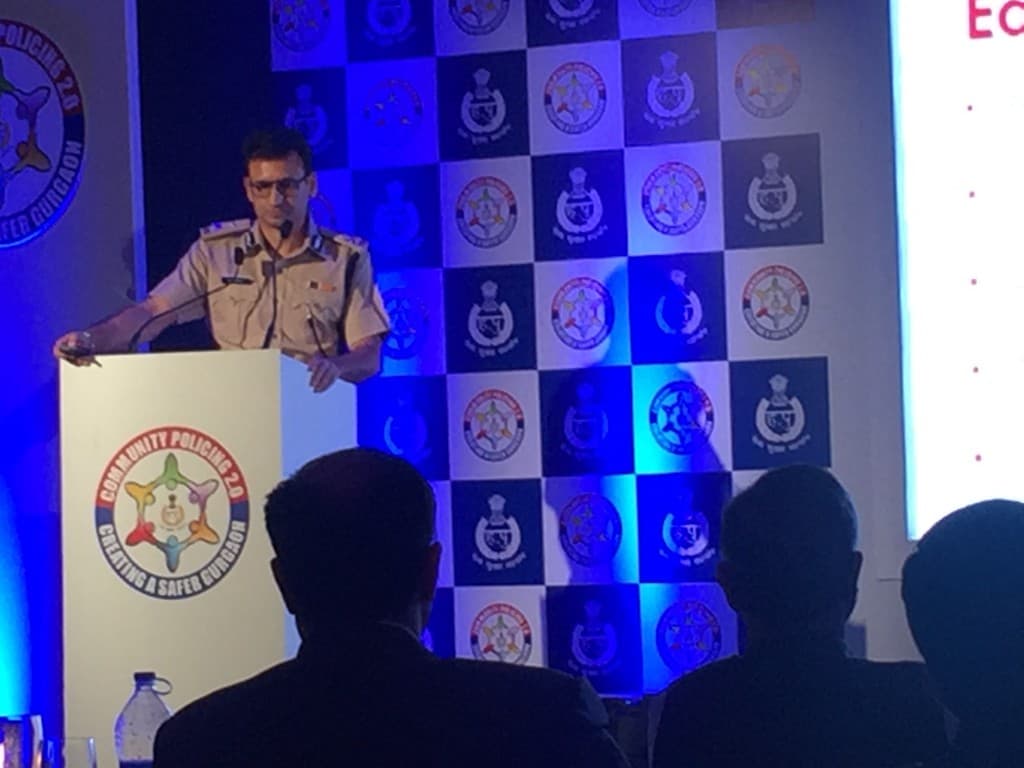
Legitimate awareness work looks like seminars, ward meetings, school sessions, and verified social-media alerts — for example community-policing programmes that invite the public onto a stage and explain cyber fraud face to face. That is education.
It does not look like:
- A private video call that forbids you from telling your spouse
- Threats of immediate jail if you disconnect
- Instructions to buy USDT, Apple gift cards, or transfer to a personal UPI ID
- “The magistrate is waiting on this call — pay now”
If your city police invite you to a public programme or post an alert on a verified handle, that can be real. A stranger forcing you to stay on a locked video call is the opposite of policing.
Red flags — end the call without arguing
- “You are under digital arrest — do not disconnect”
- Ban on contacting family, lawyer, or local thana
- Demand for money, crypto, vouchers, or “security”
- Refusal to give a verifiable station name you can call back independently
- Pressure to install AnyDesk / TeamViewer / screen share
- Story that contradicts what you can check offline (no real parcel, no FIR you can verify)
What to do in the first ten minutes
- Disconnect. Do not stay “to clear your name” on their script.
- Tell a trusted person in the room or on a different phone. Isolation is the weapon.
- Verify offline using numbers from your local police website, 112, or a station you already know — never a number dictated by the caller.
- If any money moved: call 1930, file on the national portal cybercrime.gov.in, and inform your bank with UTRs the same day.
- Keep call recordings, screenshots, and UPI references for the complaint.
Practical guides on this site: What happens if you call 1930? · How to report a cyber crime in India · Can police recover UPI money after 7 days? · What is a money mule account?.
If you already paid
Act fast. Early reporting improves the chance that banks and cyber cells can freeze onward transfers. File the cybercrime complaint, share acknowledgement numbers with your bank’s fraud desk, and do not send “one more payment to reverse the first”. Scammers often run a second act after the first transfer.
Official starting points:
- National Cyber Crime Reporting Portal: cybercrime.gov.in
- Helpline 1930 for financial cyber fraud
- Local police / cyber cell through channels you verify yourself
One line to remember
No genuine Indian agency will digitally arrest you on a video call and ask for money to release you. That sentence is the scam. Walk away, tell someone, verify offline, then report if money moved.